AcademyCompetitive Typing: Formats, Rules, How to Start
Competitive typing means racing to type a set text fast and clean under shared rules. The formats, how championships score errors, fair play and how to start.

On this page7 sections
Competitive typing is racing to type a given text as fast as you can without mistakes, under rules every competitor shares: the same kind of text, the same clock and the same scoring. It runs from 15-second online sprints and daily challenges to a world championship where typists copy a printed text for 30 minutes and lose 100 points for every error. Here is how the formats differ, how errors are scored, what fair play means and how to start.
Key takeaways
- Shared text, clock and scoring turn a typing test into a competition.
- Errors decide close races. At the 2024 world championship, the senior title on standard keyboards went to the slightly slower of the top two typists, who made fewer errors.Source 3
- Each format tests something different: a 15-second sprint rewards a burst, a minute rewards a pace you can hold, and a 30-minute championship rewards endurance and near-perfect accuracy.
- Fair play means your own fingers on the text: no pasted, predicted or autocorrected words where the rules forbid them, and no outside help.
- Start with a baseline, then race one format at a time.
What makes typing competitive
A practice test measures you. A competition compares you with other typists, so three things have to be the same for everyone:
- The text, or text drawn the same way from the same word list, so the result reflects typing rather than an easier passage.
- The clock: a fixed time, such as 15 seconds or 30 minutes, or a fixed amount of text.
- The scoring: speed counted one way, errors penalized one way. Most typing tests count a “word” as five characters, spaces included, a convention from the early typing contests;Source 5 championships may count characters directly.
Typing contests are older than computers. In a contest in Cincinnati on July 25, 1888, Frank McGurrin, who typed by touch, beat a rival using an eight-finger method, and the result made front pages. Whether McGurrin was the first touch typist is disputed.Source 4
The main formats
| Format | How it works | What it rewards |
|---|---|---|
| Sprint | A short timed test, often 15 seconds | A fast, clean burst |
| Standard test | One minute of timed typing | A pace held for the full minute |
| Daily challenge | One text a day, the same for everyone, first attempt counts | Composure on a first read |
| Fixed passage | The same text, raced again and again | Flow on a text you know |
| Live race | Several typists type one text at the same moment | Speed under head-to-head pressure |
| Championship copying | 30 minutes copying a printed text | Endurance and near-perfect accuracy |
TYPETRANCE has two official formats on the same 1,000 common English words: the 15-second Sprint and the 60-second Grand Prix. Qualifying is its daily challenge: 40 common words with punctuation, seeded from the date, so every typist races the same text that day, and your first finished run is your qualifying time. Time Attack is the fixed-passage format: famous passages, the same words every run, with a record per passage kept on your device.
How a world championship scores errors
Intersteno, the International Federation for Information and Communication Processing, holds international typing championships at its congresses; the 2026 congress was held in Liverpool from 25 to 30 July.Source 2 Its text production contest works like this under the 2026 rulesSource 1:
- The task: copy a printed text for 30 minutes.
- The groups: seniors (over 20 in the year of the contest), juniors (17 to 20) and pupils (under 17). Standard keyboards, chord keyboards such as shorthand machines, and speech recognition in respeaking mode are ranked separately.
- The scoring: points come from the keystrokes a standard keyboard needs to produce the text, and each error costs 100 points: a missing, extra or wrong character, two characters or words swapped, a missing or extra word or line, or an extra line break.
- The minimum: a senior’s result counts from 360 characters a minute with no more than 0.25% errors (juniors 300, pupils 240), and a senior world champion title on a standard keyboard needs at least 15,000 net points.
A penalty of 100 points is worth 100 keystrokes. Spread over 30 minutes, each error costs as much as typing about 3.3 fewer keystrokes every minute. That is how the 2024 senior contest on standard keyboards was decided:
Over 30 minutes, those error rates work out to about 10 errors for Vala and 6 for Çiller. Four extra errors cost 400 points, far more than the 9 keystrokes Vala gained with his higher speed. Two years later, in Liverpool, Vala placed first among the seniors on standard keyboards, at 837.5 characters a minute with 0.088% errors.Source 2
Online scoring works on the same idea in a different form. On TYPETRANCE, a word with a mistake left in it earns no credit, and accuracy counts every miss, even the ones you fix; the rules are in how WPM is calculated.
Fair play
What counts as cheating is much the same everywhere: text you didn’t type key by key yourself, or help the rules don’t allow.
- No outside help. Intersteno’s rules require competitors to work without the aid of any external source or device, ban phones and other devices with internet access from the room, and let the jury inspect competitors’ equipment. Remote cameras may record the contest to check fair play.Source 1
- No assisted text where it’s barred. On TYPETRANCE, pasted text, tapped word suggestions, autocorrect, gesture typing and dictation count as assisted input: the run stays in your history but never sets a personal best, and ranked runs refuse it. Championship rules can differ: Intersteno’s 2026 rules allow PC dictionaries with spell checking.Source 1
- Results are checked, not trusted. When ranked play opens, every ranked Sprint and Grand Prix run will be replayed on TYPETRANCE’s server from its keystrokes, against the server’s own text, and has to reach the same result. Keyboards and touch screens race on separate boards. The leaderboards list the stewards’ rules in full.
- No check is proof. No browser can prove who pressed the keys, and TYPETRANCE never claims one does. Checks raise the cost of cheating and catch results that don’t add up.
How to start competing
- Set a baseline. Take the 1-minute Grand Prix three times and keep the middle result, not the best.
- Pick one format and learn it. A Sprint rewards a fast, clean start; a Grand Prix punishes a fade. Compare each result only with the same format: on TYPETRANCE a word left wrong costs about 4.6 WPM in a Sprint and 1.1 WPM in a Grand Prix.
- Qualify every day. One attempt that counts, on a text you haven’t typed before, is the closest practice to race pressure.
- Race a recorded pace. In Settings, set Ghost to PB ghost, and a caret replays the pace of your best run in that format, second by second.
- Protect your accuracy. In every scoring system above, an error costs more than a little speed; accuracy vs speed shows where to set the balance.
- Build endurance before long formats. For a 30-minute contest, work up through the 10-minute test on punctuated text.
Race it now
QualifyingQualifying
Qualifying: one text a day, the same for everyone, and your first finished run counts.
Enter qualifying
If you are wondering how far the fastest typists go, typing speed world records collects the documented results, from championship records to stenotype.
Frequently asked questions
What is competitive typing?
Racing other typists, live or by comparing results, on the same kind of text with the same clock and the same scoring. It ranges from 15-second online sprints and daily challenges to Intersteno's world championship, a 30-minute copying test in which every error costs 100 points.
How fast do you need to be to compete?
Online, there is no minimum: daily challenges and leaderboards take every finished run. At Intersteno's 2026 world championship, a senior copy typist needed at least 360 characters a minute, about 72 WPM, over 30 minutes with no more than 0.25% errors for the result to count.
Can you use autocorrect in a typing competition?
It depends on the rules, so read them first. Intersteno's 2026 rules allow personal and PC dictionaries with spell checking. On TYPETRANCE, autocorrected, suggested, pasted or dictated text is assisted input: the run never sets a personal best, and ranked runs refuse it.
Is a 15-second test a fair competition?
Yes, when everyone races the same format: it measures a burst, and everyone gets the same clock. Single short runs swing more than long ones, so compare a Sprint only with other Sprints, and judge yourself by your typical run rather than one lucky result.
Do I need a special keyboard to compete?
No. Intersteno ranks standard keyboards separately from chord keyboards such as shorthand machines, and TYPETRANCE keeps keyboards and touch screens apart. Practice on the keyboard you will compete on.
Sources
- Touch typing (Wikipedia)Cited in the text1
- A Note on Calculating Text Entry Speed (I. Scott MacKenzie)Cited in the text1
How this guide is made
The sources behind this guide are listed above with the date we last checked each one. A guide stays marked as a draft until an editor has reviewed it.
Scores on TYPETRANCE follow published rules: How WPM Is Calculated: The Formula and TYPETRANCE's Exact Rules and Flow Score: How the Experimental Rhythm Metric Works.
More in Guides
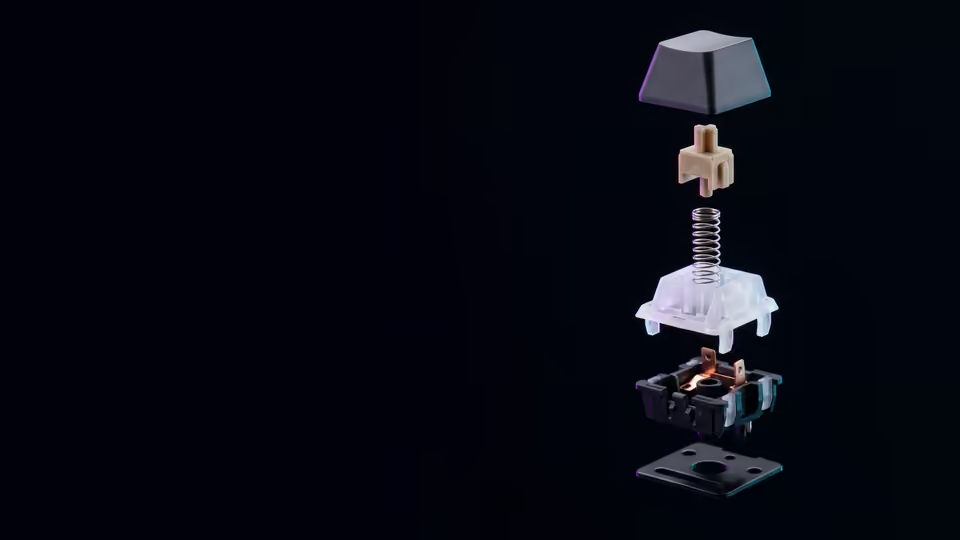
Mechanical Keyboards: Do Switches Make You Type Faster?
What linear, tactile and clicky switches change, what actuation and rollover mean, and what research says about keyboards and typing speed.

How to Type 100 WPM: What It Takes and a Plan
100 WPM means 500 correct characters a minute, one every 120 ms. What the fastest typists do differently, and a plan to get there from where you are now.
QWERTY vs Dvorak vs Colemak vs Workman: Layouts Compared
A fair, sourced comparison of QWERTY, Dvorak, Colemak, Colemak-DH and Workman: their history, design goals, a home-row model and what switching costs.